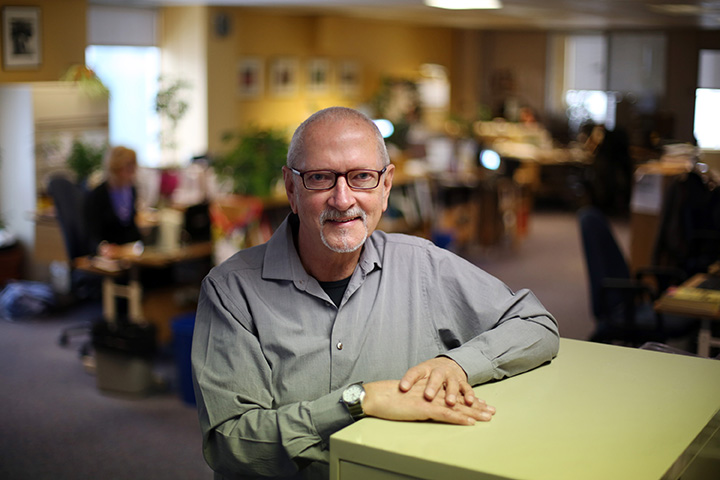
Kam Rao, Canadian Media Guild campaign coordinator
What can we do to ensure a strong future for CBC?
The single most important thing any one of us can do is have a conversation about the value of public broadcasting. And then have another one, and another one after that.
Retired Radio-Canada journalist Pierre-Léon Lafrance published the following article, in French, in the Lambert Express, a local community newspaper in the Montréal. region. (Translated by Gérard Malo, national vice-chair of CWA/ Canada Retirees Council.)
After enduring countless painful stomach cramps while doing long and hard thinking, I will do here what I’ve never done during a 40-year-long career in journalism. I will speak in the first person
Pierre-Léon Lafrance
to publicly discuss the situation at Radio-Canada/CBC. I have spent 37 years at Radio-Canada as a local journalist, parliamentary and international correspondent, columnist, and with Radio-Canada International, as Chief Editor.
As we know, our national public broadcaster is now in the eye of the storm, and will come out of it seriously disfigured and wounded to the core. Many things have been said in the last few months about the long series of budgetary cutbacks at Radio-Canada/CBC. It all began, let’s not forget in the 1980s under the Brian Mulroney government. But I will focus on three points : Public service, the shift to digital media, and what happens next. Continue reading CBC – Enough is enough, a first-person account→
I have been aware and concerned about democratic and social-justice values ever since I first voted, a very long time ago. It was in the 1966 Québec provincial election. I’ve been defining myself as a “social democrat” since my young-adult years, which saw me canvassing for a then new Québec political party where most progressive people could be found. Of course in 1976, when I became a broadcast journalist, I had to end my involvement in partisan politics. But throughout my 37 working years, 33 at Radio-Canada, I would dream about getting back into active politics once I retired. Well, the dream finally came true on Aug. 2, 2012, the day after I officially retired from CBC/Radio-Canada. That is when I first joined the New Democratic Party.
Alberta retiree Jack Wilson is a member of our executive and working committee. Let’s let Jack tell us why he joined the Council.
I have been a member of the Communications Workers of Alberta Local 30400 since I helped organize the Wall to Wall chapter at the daily Red Deer Advocate in 1992. At the time the unit had more than 150 members but has been eroded to about 105.
Easing into retirement could be compared to moving to another country.
Matthew Radz has been easing into retirement since he quit working seven years ago after 40 years in the newspaper business. He was an editor and arts writer on half a dozen publications, including The Toronto Telegram, the Montreal Star, Harrowsmith magazine and, since 1980, The Montreal Gazette. Post-retirement passions include nature/urban photography, long 19th-century novels, and he still dabbles in writing. He took time out from his busy retirement life to write this piece.
No visa or passport required, but there is the paperwork and the hundred and one details, to say nothing of the nagging questions. Will I have enough money to live on? – the most pressing and immediate.
In his recent video, Made in the USA: Tim Hudak’s Plan to Cut Your Wages, retired journalist Bill Gillespie exposes the truth about the Ontario Conservative leader’s right-to-work crusade.
Even though Hudak is reported to have retreated from his crusade, workers are gearing up to take him on in the next provincial election.
Gillespie’s story was featured in a recent CWeh! Canada newsletter.
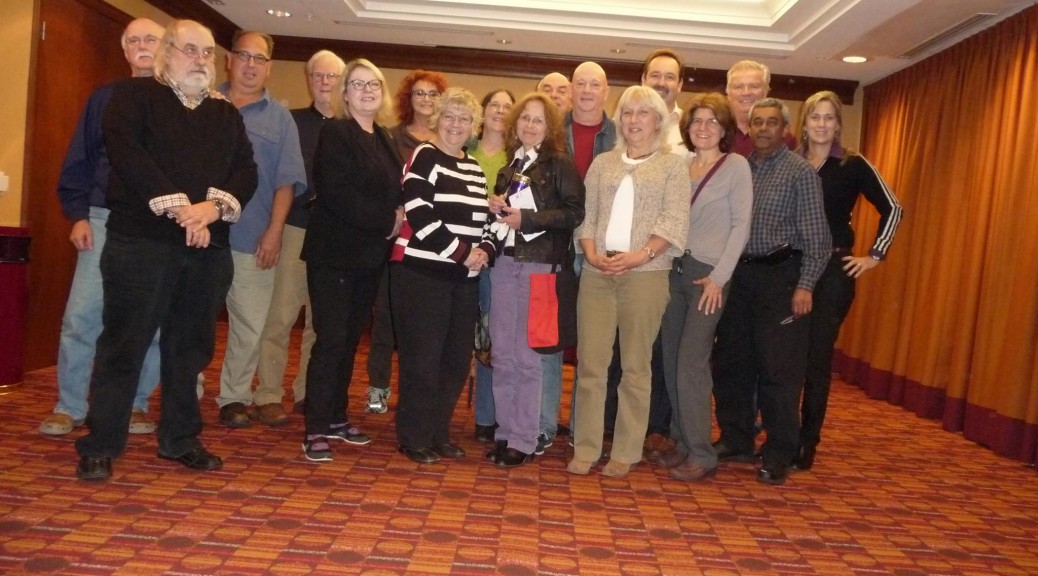
The CWA Canada Retirees Council was officially launched following a day of spirited debate and discussion in a hotel boardroom in Toronto on November 2, 2013. The media-savvy activists from across the country, with decades of experience and time on their hands, were keen to get moving right away.
Gerry Jones, elected as the Council’s executive chair, said they will now “be able to do more to support our brothers and sisters in defending things that re important to them, such as public broadcasting, journalism, union rights, pensions and benefits.



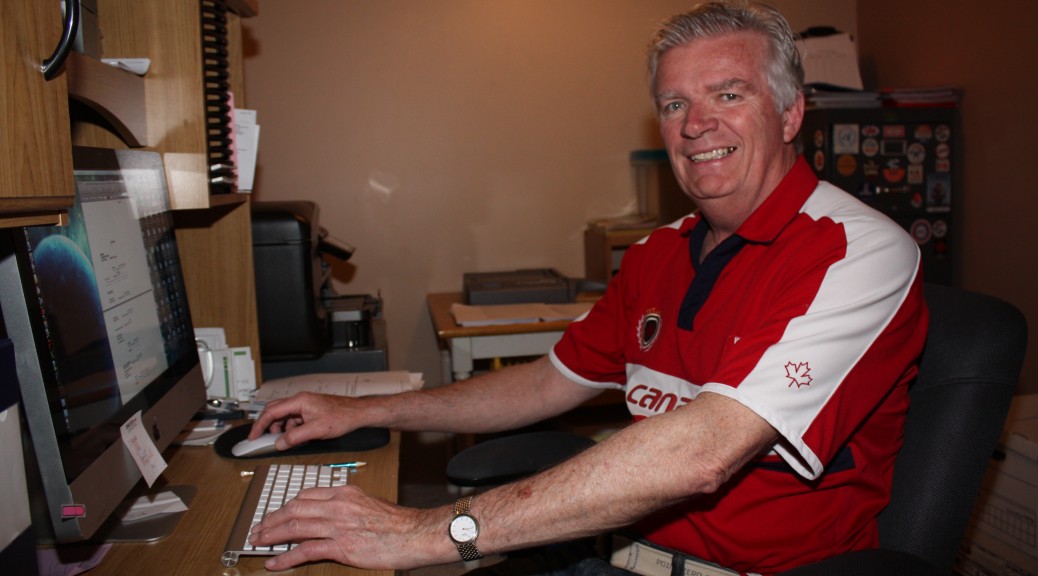

 Telegram, the Montreal Star, Harrowsmith magazine and, since 1980, The Montreal Gazette. Post-retirement passions include nature/urban photography, long 19th-century novels, and he still dabbles in writing. He took time out from his busy retirement life to write this piece.